57 Small Living Room Ideas for Characterful Compact Spaces
A small room does not have to feel short on style. With the right furniture, layout, lighting, colour and storage, even the most compact space can feel comfortable, personal and surprisingly spacious.
The best small living room ideas are not about squeezing miniature furniture into every available corner. They are about making thoughtful choices: giving furniture enough breathing room, creating a clear path through the room, using vertical space, and adding warmth without adding clutter. If you’re after a broader style reset rather than a space-saving fix, ourModern living room ideas guide is a good next stop.
Whether you live in an apartment, cottage, townhouse or a compact family home, these 57 small living room ideas will help you create a room that feels both practical and full of character.
1. Start With the Layout Before Buying Anything
Before thinking about cushions, artwork or accessories, work out your small living room layout.
Measure the walls, doors and windows, then mark the main walkway. Your furniture should support how you actually use the room rather than simply filling empty floor space.
Current interior-design guidance increasingly puts layout before decoration because poor furniture placement can make an otherwise attractive room feel cramped.
2. Choose One Main Focal Point
Every room benefits from a visual anchor.
In a small living room, that could be a fireplace, television, large window, artwork or an architectural feature. Once you know where the eye should land, arrange the seating around it.
A strong focal point prevents the room from looking visually scattered.
3. Measure Your Furniture First
One of the easiest ways to improve a compact room is to stop guessing about furniture size.
Measure your sofa, chairs, coffee table and storage pieces before buying them. A beautiful sofa that is too deep can consume far more usable space than its width suggests.
Good furniture ideas for small living room spaces start with proportion, not simply with finding the smallest possible pieces.
4. Do Not Automatically Buy Tiny Furniture
It sounds logical to fill a small room with small furniture, but that can sometimes make the space look busier.
Instead, consider one properly scaled sofa as the main anchor and use fewer supporting pieces. Designers often recommend thinking about scale rather than simply choosing miniature furniture for a small room.
5. Try a Compact Sofa
A compact two- or three-seat sofa can provide comfortable seating without overwhelming the room.
Look for clean arms, moderate depth and a shape that suits your floor plan. Slimmer proportions can leave more room for circulation.
6. Consider an L-Shaped Sofa
A small L-shaped sofa can be surprisingly efficient.
Placed into a corner, it can create generous seating while keeping the centre of the room open. This works especially well in rectangular rooms where two separate sofas would take up too much floor space.
7. Float the Sofa When the Layout Allows It
Pushing every piece of furniture against the walls is not always the best solution.
In some rooms, pulling the sofa slightly away from the wall can create a more intentional seating zone and improve circulation. The right decision depends on the room shape and walkway.
8. Keep the Main Walkway Clear
A beautiful room is still frustrating if you have to squeeze around the furniture.
Make the main route from the entrance to other parts of the home obvious and unobstructed. A recent layout-focused approach recommends establishing the walkway before deciding where the furniture belongs.
9. Use a Round Coffee Table
A round coffee table can be useful when space around the sofa is tight.
Without sharp corners, it is easier to move around the table, and the softer shape can balance a room dominated by straight lines.
10. Replace the Coffee Table With an Ottoman
If you want extra comfort and flexibility, consider an ottoman.
A compact upholstered ottoman can work as a footrest, casual seat and coffee-table alternative when paired with a tray.
11. Skip the Coffee Table Entirely
Sometimes the smartest table is no table at all.
If your room is exceptionally narrow, use small side tables or nesting tables instead. Leaving the centre open can dramatically improve movement.
12. Choose Furniture With More Than One Job
Multifunctional furniture is one of the most useful solutions for tiny living room ideas.
Think storage ottomans, nesting tables, sofa beds, benches with hidden compartments and compact desks that can double as console tables.
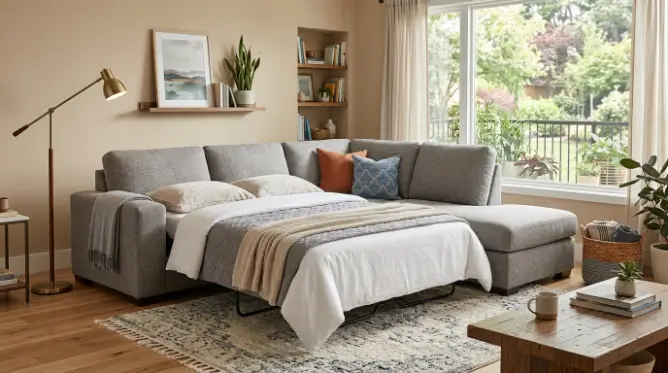
13. Use a Sofa Bed in a Multifunctional Room
If your living room also needs to accommodate overnight guests, a sofa bed can make the space work harder.
Choose a design that looks like a proper sofa during the day so the room still feels like a comfortable living room, rather than a temporary bedroom.
14. Add Built-In Storage
Built-in cabinetry can turn awkward walls into useful storage.
Floor-to-ceiling shelving, cupboards around a fireplace or a custom media unit can provide storage while making the room feel more considered.
15. Use Vertical Space
When floor space is limited, look upwards.
Tall bookcases, wall-mounted cabinets and floating shelves add storage without occupying the same footprint as a large floor-standing unit.
16. Make Use of Alcoves
An alcove that seems too awkward for furniture may be perfect for shelving.
You could add books, artwork, baskets, lamps or a small reading nook. Making use of architectural dead space is one of the easiest ways to improve compact rooms.
17. Build Storage Around the Fireplace
If your room has a fireplace, use the surrounding wall intelligently.
Built-in shelving or cabinetry can frame the fireplace and create a natural focal point while providing valuable storage.
18. Hide Everyday Clutter
The goal is not to own nothing. It is to make everyday objects easy to put away.
Closed cabinets, baskets and drawers can hide chargers, toys, remotes and paperwork while allowing decorative pieces to remain visible.
19. Use a Large Rug to Define the Seating Area
A rug can visually connect separate furniture pieces.
Rather than choosing an extremely small rug that sits alone in the middle of the floor, select one large enough to anchor at least the front legs of the main seating.
Layering rugs and texture is also a recurring recommendation in current small-space inspiration.
20. Create a Small Conversation Zone
Not every living room decor ideas concept needs to revolve around television.
Two compact chairs facing a sofa can create a comfortable conversation area. Angle the chairs slightly toward the centre to make the arrangement feel relaxed rather than formal.
21. Use an Armchair Instead of a Second Sofa
A second sofa can quickly overwhelm a small room.
A single armchair, slipper chair or compact lounge chair can provide additional seating while preserving visual breathing room.
22. Consider Banquette Seating
If your room has an unusual corner or connection to a dining area, banquette seating can make excellent use of limited space.
It can provide seating for both lounging and dining without requiring several freestanding chairs.
23. Use the Window as Part of the Design
Natural light is valuable in a compact room.
Avoid placing bulky furniture directly in front of a window unless the arrangement genuinely works. Keep sightlines open where possible so daylight can travel through the space.
24. Add a Mirror Opposite a Window
A well-positioned mirror can reflect natural light and create the impression of greater depth.
A large mirror can also become a decorative focal point instead of requiring several smaller wall accessories.
25. Choose Light, Airy Window Treatments
Heavy curtains can sometimes make a small room feel enclosed.
Lightweight curtains hung close to the ceiling and extending beyond the window can make the windows appear larger while keeping the room soft.
26. Try a Light Colour Palette
Pale walls, soft neutrals and gentle tones can help a room feel brighter and more open.
This is particularly useful when the room receives limited daylight.
27. Do Not Be Afraid of Dark Colours
A small room does not automatically need white walls.
Deep blue, green, brown or warm earthy tones can create a cosy, enveloping atmosphere. The key is to control the palette and balance darker surfaces with appropriate lighting.
28. Use One Strong Accent Colour
If you prefer a neutral room, introduce one confident colour through a sofa, artwork, rug, curtains or cushions.
Keeping the accent colour consistent helps the room feel designed rather than randomly decorated.
29. Try Tonal Decorating
Using several shades from the same colour family can make a compact room feel cohesive.
For example, combine soft blue walls with deeper blue upholstery and muted blue-grey accessories.
30. Mix Warm Earthy Colours
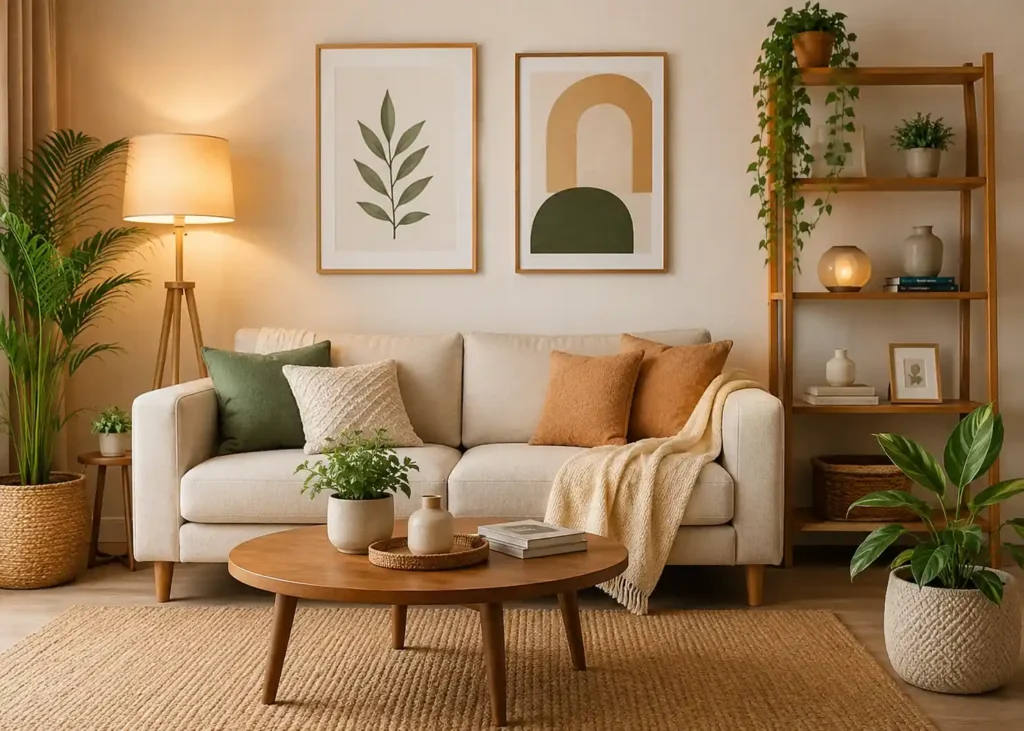
Terracotta, caramel, chocolate, cream and muted green can create a welcoming palette.
These colours work particularly well for cozy small living room decor, especially when combined with natural wood and textured fabrics. If you’d rather lean into a richer, more elevated palette, ourLuxury living room decor guide covers deeper tones and finishes that still work in compact rooms.
31. Add Pattern Carefully
Small rooms can handle pattern.
The trick is repetition. Choose one or two patterns and repeat their colours elsewhere in the room so the overall scheme feels connected.
32. Layer Textures
Texture is one of the easiest ways to make a room feel rich without adding more furniture.
Combine linen, wool, velvet, wood, woven baskets, boucle, cotton and ceramic finishes.
33. Create a Cozy Small Living Room With Lighting
Good lighting can completely change the atmosphere of a compact space.
Instead of relying on one ceiling fixture, use a combination of ambient, task and decorative lighting. Layered lighting is particularly valuable in small multifunctional rooms.
34. Use Warm Lighting at Night
For genuinely cozy lighting living room schemes, warm-toned bulbs and shaded lamps can create a softer evening atmosphere.
Place lamps at different heights so the light does not come from a single point overhead.
35. Add a Table Lamp
A small table lamp on a side table, shelf or console can add both function and atmosphere.
It is one of the simplest ways to introduce cozy living room lighting without taking up much floor space.
36. Try Wall Lights
Wall-mounted lights are particularly useful when floor and table space are limited.
They can provide reading light while keeping surfaces clear.
37. Add a Floor Lamp in an Empty Corner
If you have one unused corner, a slim floor lamp can turn it into a useful visual feature.
Choose an open or narrow design rather than a bulky lamp with a large base.
38. Use Lighting as Decor
A beautiful pendant, picture light or sculptural lamp can become part of the room’s decoration.
Small living rooms often benefit from having fewer, better-chosen focal points rather than many competing objects.
39. Create a Gallery Wall
A gallery wall can give personality to a small room without consuming floor space.
Use frames with a common colour, similar spacing or a shared visual theme to keep the display cohesive.
40. Hang One Oversized Artwork
Alternatively, make one artwork the star.
A large painting can actually feel calmer than lots of small pieces because it creates one clear visual statement.
41. Use Books as Decoration
Books bring colour, texture and personality to shelves and coffee tables.
Stack a few favourite titles horizontally, then combine them with ceramics, framed photographs or small objects.
42. Add Plants Without Crowding the Floor
Plants make a living room feel fresh, but large pots can quickly consume precious floor space.
Use shelves, window ledges or hanging planters where appropriate. One well-placed plant can have more impact than several crowded together.
43. Give the Fireplace a Leading Role
A fireplace can naturally become the focal point of a compact room.
Keep the surrounding decoration intentional and arrange seating so the fireplace contributes to the composition rather than becoming an obstacle.
44. Make a TV Less Dominant
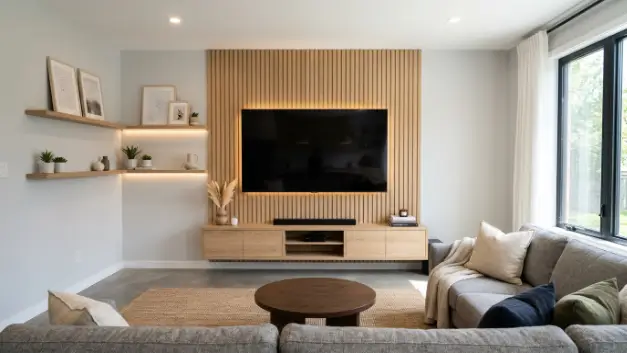
If the television is necessary but visually distracting, mount it neatly or incorporate it into built-in cabinetry. Browsing a fewTV wall ideas before you commit can help you find a setup that fits a smaller wall without overwhelming it.
This can help the room feel more like a designed living space and less like an entertainment zone.
45. Use Curtains to Zone an Open Space
If your living room shares space with a dining area, office or bedroom, curtains can create flexible separation.
They take up less visual weight than permanent partitions and can be opened when you want the room to feel larger.
46. Create a Small Work Area
A compact living room can double as a home office.
Use a narrow desk, wall-mounted shelf or console-style workstation. Keep the work area visually tidy so it does not dominate the room when you are relaxing.
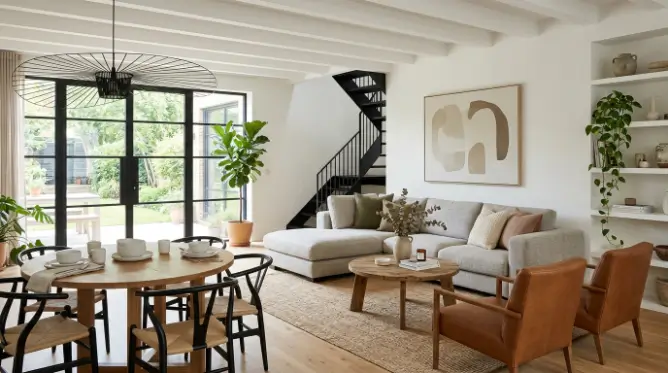
47. Combine Living and Dining Areas
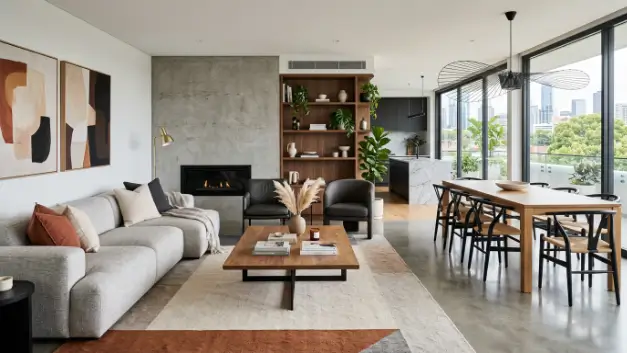
In an open-plan home, use furniture placement to define zones.
A rug can identify the living area while the dining table occupies the adjacent space. Make sure the route between both zones remains easy to navigate.
48. Use the Same Colour Across Connected Spaces
When your living room opens directly into another room, repeating one or two colours can make both spaces feel larger and more connected.
You do not need identical furniture or decoration; just create a visual relationship between the spaces.
49. Let One Piece of Furniture Make a Statement
A small room does not need to be boring.
A colourful sofa, vintage cabinet, patterned chair or unusual light can provide character while the rest of the scheme remains relatively calm.
50. Mix Old and New Pieces
Antique furniture can work beautifully in compact interiors.
Instead of filling the room with matching modern pieces, combine one vintage chair or cabinet with contemporary upholstery and clean-lined accessories.
This approach gives the room personality without requiring excessive decoration.
51. Take Inspiration From a Chris Loves Julia Living Room
For interior design inspiration, look at rooms that combine traditional details with modern comfort.
The Chris Loves Julia living room is a useful example of how layered lighting, artwork, rugs, comfortable seating and traditional architectural details can work together. Their current living room uses multiple light sources, built-ins, sofas, chairs, tables and decorative layers rather than relying on a single overhead fixture.
The lesson is not to copy the room. Instead, borrow the principle: choose a few elements you love and adapt them to your own room’s scale.
52. Make a Modern Living Room Feel Warm
A modern living room does not have to feel cold.
Add natural wood, textured rugs, soft upholstery, warm lamps, books and personal objects. Clean-lined furniture becomes much more inviting when balanced with tactile materials. For more direction on this style, see our fullModern living room ideas roundup.
53. Create a Cozy Reading Corner
A small corner can become a dedicated reading spot with an armchair, slim side table and lamp.
You do not need a separate room for every activity. Good interior design ideas often come from making one small area serve a specific purpose.
54. Leave Some Empty Space
This may be the most important idea of all.
Do not feel compelled to decorate every wall or fill every corner. Empty space gives the eye somewhere to rest and allows your favourite furniture and artwork to stand out.
The evolution of the Chris Loves Julia living room also illustrates how allowing some breathing room can become part of the overall design rather than something that needs to be filled.
55. Keep Decorative Objects Curated
Instead of displaying everything you own, choose a smaller collection of meaningful pieces.
Three well-placed objects can have more impact than fifteen unrelated accessories.
This is especially important when exploring room decor ideas for a compact space.
56. Avoid These Small Living Room Mistakes
Some decorating decisions can make a small room feel even smaller:
- Buying furniture without measuring it
- Blocking the main walkway
- Using too many tiny decorative objects
- Choosing a rug that is too small
- Relying on one harsh overhead light
- Filling every wall
- Using too many unrelated colours
- Choosing oversized storage units
- Ignoring vertical space
- Pushing every piece of furniture against the walls without considering the room’s shape
The best small living room decorating ideas always balance appearance with everyday movement.
57. Design for How You Actually Live
Finally, forget the idea that your room needs to look like a showroom.
If you watch films every evening, prioritize comfortable TV viewing. If you entertain friends, create a conversation-friendly arrangement. If children use the room, choose durable fabrics and accessible storage. If you work from home, include a practical workspace.
The best living room decor ideas are the ones that make daily life easier while still reflecting your personality.
How to Decorate a Small Living Room Without Making It Feel Cramped
If you are wondering how to decorate a small living room, start with three priorities: layout, scale and light.
First, establish where people need to walk. Then choose furniture that fits that circulation pattern rather than buying pieces first and trying to make them fit afterwards.
Next, create one clear focal point. This could be a fireplace, window, artwork or television.
Finally, layer your lighting. A mixture of ceiling, wall, table and floor lighting creates more depth than one bright overhead fixture. For a cosy atmosphere, incorporate warm light sources at different heights.
How to Make a Small Living Room Look Bigger
You do not necessarily need to make the room visually empty to make it feel larger.
Instead:
- Keep walkways clear
- Use appropriately scaled furniture
- Let natural light travel through the room
- Use mirrors strategically
- Choose a cohesive colour palette
- Take advantage of vertical storage
- Avoid excessive visual clutter
- Use a rug to anchor the seating area
- Choose furniture with visible legs where appropriate
- Keep window treatments light
- Use layered lighting
The aim is to create visual breathing room, not simply to remove everything from the space.
Best Small Living Room Ideas for Apartments
Apartments often have to accommodate several functions in one room, making flexible furniture particularly useful.
For small apartment living room spaces, consider a compact sofa, nesting tables, wall-mounted storage, a storage ottoman and a small desk.
If the living room also connects to a kitchen or dining area, use rugs, lighting and furniture orientation to create separate zones without closing the room off.
Small Living Room Ideas for Different Styles
Modern Small Living Room
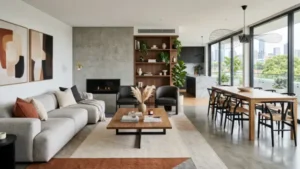
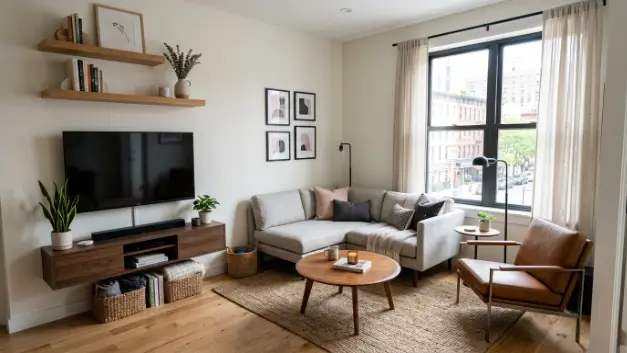
For a modern scheme, focus on clean lines, simple silhouettes, restrained decoration and multifunctional furniture.
A neutral sofa, sculptural light, textured rug and one strong artwork can be enough.
Cozy Small Living Room
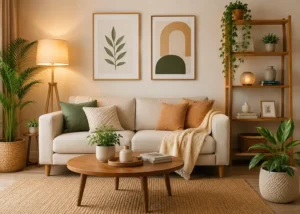
For a cozy living room, focus on warmth rather than quantity.
Layer soft textiles, warm wood, comfortable seating, cushions and multiple lamps. Keep the colour palette connected so the room feels calm rather than cluttered.
Traditional Small Living Room
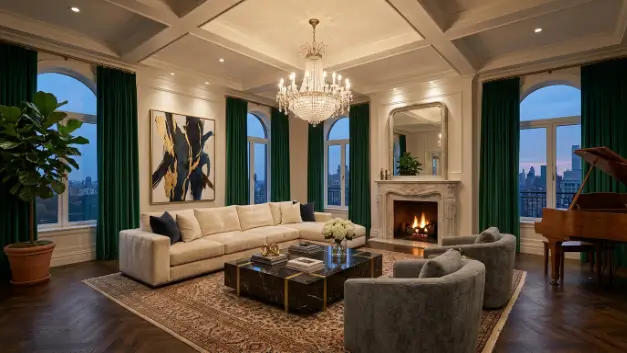
Traditional rooms can benefit from antique furniture, framed artwork, patterned textiles and architectural details.
The trick is to edit the number of pieces so each one has room to breathe.
Modern Living Room Décor With Character
If you prefer modern living room décor, combine contemporary shapes with one or two vintage or handmade elements.
This prevents the room from looking overly matched and gives the space a more collected feel.
Small Living Room Ideas: Frequently Asked Questions
What is the best layout for a small living room? The best small living room layout depends on the room’s shape, doors, windows and focal point. In many rooms, a sofa facing the main focal point with compact additional seating works well. In corner layouts, an L-shaped sofa can provide seating without taking up the entire centre of the room.
How do I make a tiny living room feel bigger? Start by improving circulation, reducing visual clutter and choosing furniture that fits the room. Mirrors, natural light, vertical storage, cohesive colours and layered lighting can also make a compact space feel more open.
Should furniture be against the wall in a small living room? Not always. While placing a sofa against a wall can save floor space in some layouts, floating it slightly away from the wall can create a defined seating zone and sometimes improve the overall flow. Test both options before deciding.
What furniture is best for a small living room? Look for furniture that is correctly scaled, comfortable and multifunctional. Compact sofas, nesting tables, storage ottomans, slim chairs, built-ins and sofa beds can all work well depending on how you use the room.
What colours work best in a small living room? Light colours can make a room feel brighter and airier, but dark colours can create a warm, cocooning effect. The best choice depends on natural light, personal taste and the atmosphere you want.
How can I make my small living room feel cozy? Use layered textures, comfortable seating and cozy living room lighting. Add rugs, cushions, curtains, warm wood and several low-level lamps instead of relying only on bright ceiling lighting.
What are the best lighting ideas for a small living room? Use several sources at different heights. Combine ambient lighting with table lamps, wall lights, floor lamps or picture lights. This creates flexibility and makes the room feel warmer in the evening.
Final Thoughts
The best small living room ideas are not about making a compact room look empty. They are about making every choice intentional.
Start with your small living room layout, then choose furniture according to scale. Add storage where it genuinely helps, use vertical space, introduce colour and texture thoughtfully, and create layers of warm light for evenings.
Most importantly, leave some room for the space to breathe.
Whether your style is modern, traditional, colourful, minimalist or comfortably eclectic, a small living room can still have plenty of personality. The goal is not to hide the size of the room it is to make that size work beautifully for the way you live. For more room-by-room design inspiration, visitHome Edit Guide.