Walk into a home that feels effortlessly current clean lines, a calm palette, furniture that looks like it was chosen on purpose instead of collected over a decade and you’re standing in a space shaped by contemporary interior design. It’s the style everyone points to but few can actually define. Ask ten people what it means and you’ll get ten different answers, half of which confuse it with “modern.”
That confusion is exactly why so many home renovations go sideways. You fall in love with a Pinterest board, tell your contractor you want something “modern and contemporary,” and three months later you’re standing in a room that feels more like a hotel lobby than your home. For more room-by-room design inspiration once you’ve nailed the fundamentals,Home Edit Guide is worth bookmarking.
So let’s fix that. By the end of this guide, you’ll know exactly what contemporary interior design is, how it’s different from modern style, and more importantly how to actually bring it into your own home without it feeling cold, staged, or like everyone else’s living room.
What Is Contemporary Interior Design, Really?
Here’s the twist nobody tells you: contemporary interior design isn’t tied to one decade. Unlike modern design, which refers to a specific historical movement, contemporary design is a moving target — it reflects what’s current right now. That’s the whole point of the word “contemporary.” It evolves.
In 2026, that means:
- Soft, tonal color palettes instead of stark black-and-white contrast
- Natural materials wood, stone, linen, rattan mixed with sleek metals
- Curved furniture silhouettes replacing the harsh right angles of a decade ago
- A strong focus on sustainability and locally sourced pieces
- Function-first layouts that still feel warm, not clinical
Contemporary style borrows a little from everywhere a touch of minimalism here, a nod to industrial texture there and blends it into something that feels distinctly of-the-moment. That’s why contemporary spaces rarely feel dated the way a strictly “modern” or “postmodern” room can.
Modern vs Contemporary Interior Design: Clearing Up the Confusion
This is the question I get asked more than any other, so let’s settle it once and for all.
Modern design refers to a specific style born in the early-to-mid 1900s think Bauhaus, mid-century modern furniture, and the “form follows function” philosophy. It’s frozen in time. A modern-style home today still nods back to that era.
Contemporary design, on the other hand, has no fixed era. It’s whatever is trending right now which is exactly why contemporary interior design in 2026 looks noticeably softer and more organic than it did in 2015.
Think of it this way: modern is a specific outfit from a specific decade. Contemporary is whatever’s on the runway this season. Both are stylish. Only one of them changes with the times.
The Core Elements of Contemporary Interior Design Style
If you strip contemporary design down to its bones, you’ll find a few non-negotiables that show up in nearly every project whether it’s a downtown loft or a suburban family home.
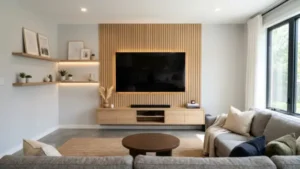
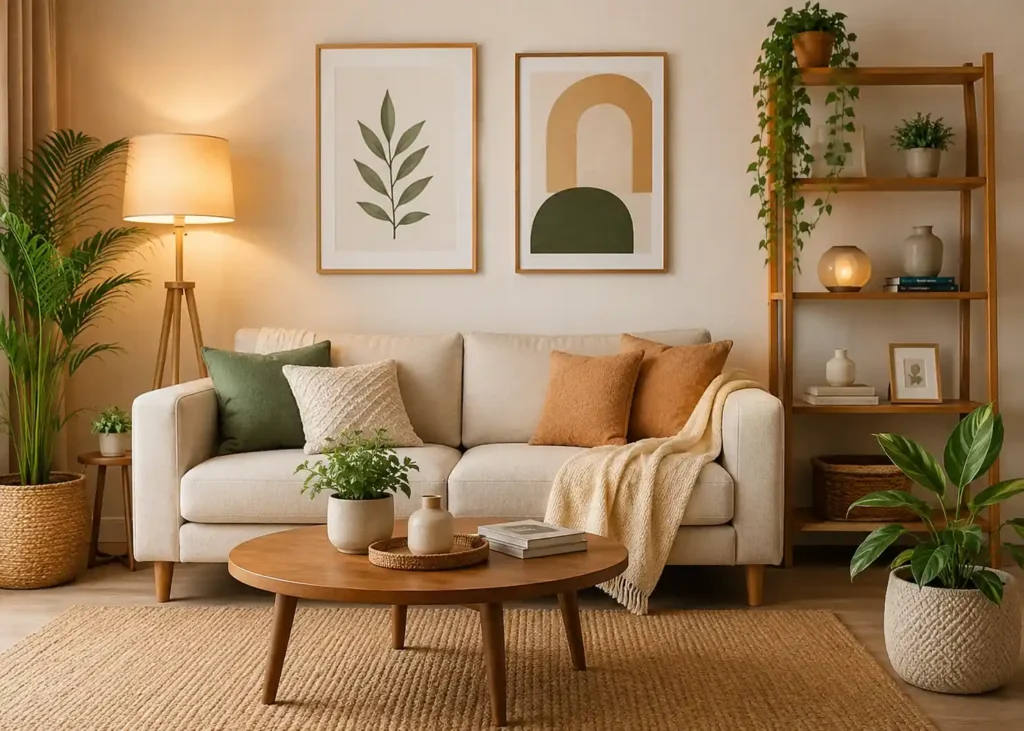
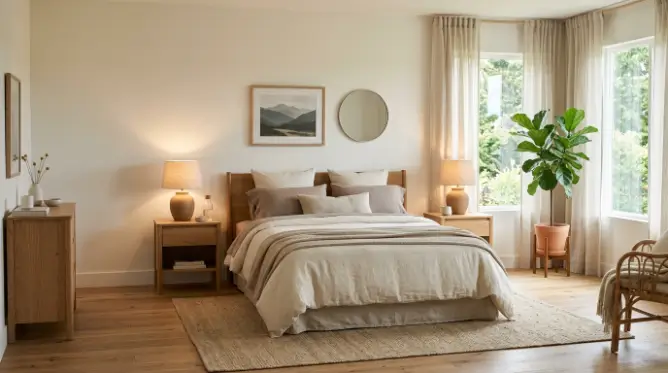
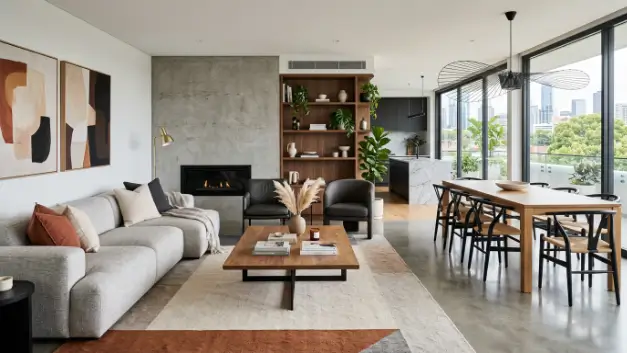
- A Restrained, Layered Color Palette Forget stark white walls. Contemporary spaces in 2026 lean into warm neutrals greige, oatmeal, soft taupe layered with one or two deeper accent tones. Black is still used, but sparingly, usually in window frames, lighting, or hardware rather than entire walls.
- Clean Lines With Softened Edges Contemporary furniture keeps the simplicity modern style is known for, but trades sharp corners for gentle curves. A rounded-arm sofa or an oval coffee table does more to soften a room than any throw pillow ever could.
- Natural Light and Open Layouts Contemporary homes are designed around light. Large windows, minimal window treatments, and open floor plans let a room breathe. If your space feels boxed in, no amount of styling will make it feel truly contemporary.
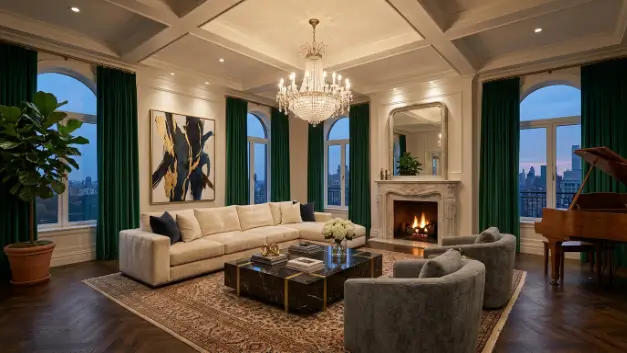
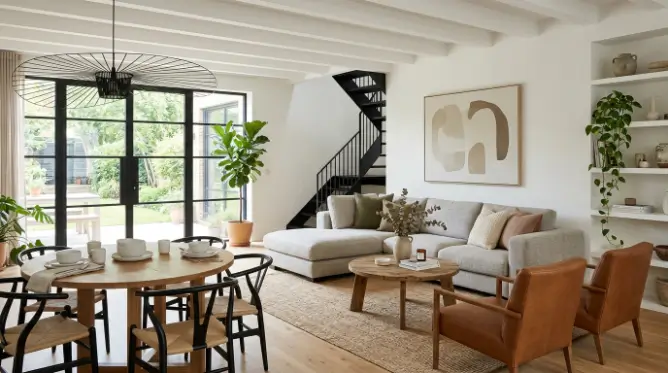
- Statement Lighting This is where a contemporary room earns its personality. A sculptural pendant over the dining table or an oversized floor lamp acts almost like art it’s function doing double duty as design.
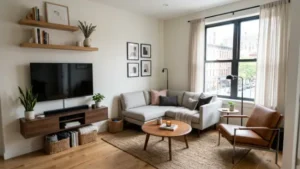
- Texture Over Pattern Instead of bold prints, contemporary design leans on texture: a bouclé chair, a woven jute rug, a linen sofa. It’s a quieter way to add depth to a room without it feeling busy.
Contemporary Interior Design for the Living Room
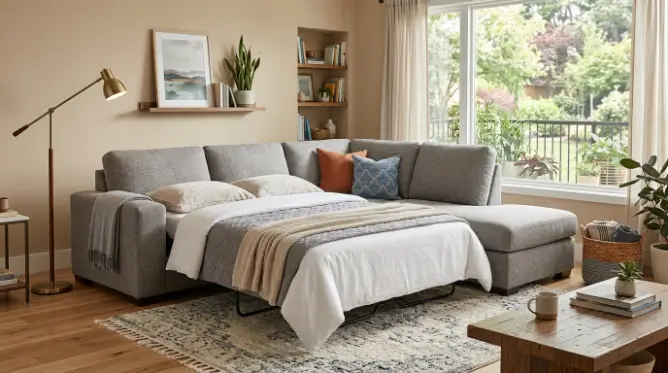
The living room is where contemporary style really gets to show off, because it’s the one room in the house that has to do everything host guests, hold movie nights, and still look pulled together on a random Tuesday.
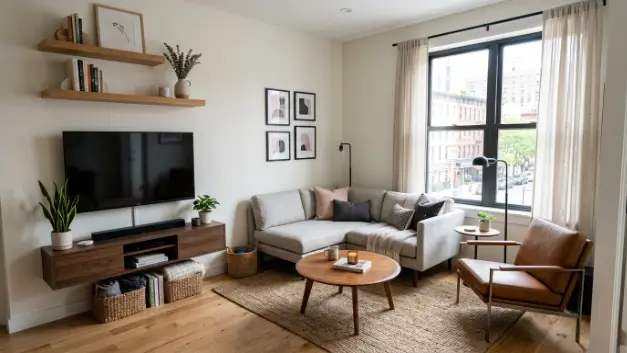
Here’s how a real contemporary living room comes together:
- Anchor with a neutral sectional or sofa in a durable, textured fabric think bouclé or performance linen rather than leather or glossy velvet.
- Layer in one bold but grounded accent color, like terracotta, sage, or deep plum, through a rug or accent chair.
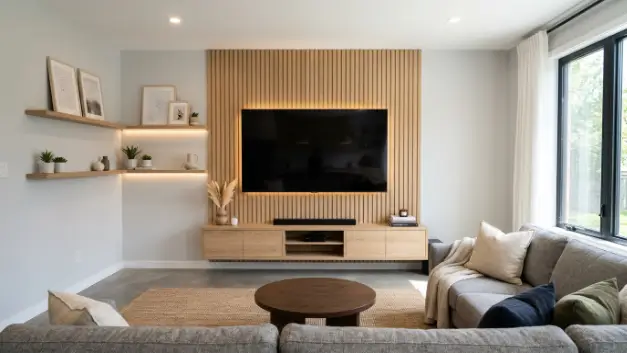
- Use a low-profile media console instead of a bulky entertainment unit; contemporary rooms avoid visual clutter at eye level.
- Add one sculptural element a floor lamp, an abstract vase, a piece of art with movement to keep the room from feeling too “safe.”
- Mix metals intentionally. Warm brass paired with matte black hardware feels current in a way that matching metal finishes never will.
I once worked with a client who insisted her living room “just needed more stuff” to feel finished. What it actually needed was the opposite we removed nearly a third of her furniture, added one oversized arched mirror, and swapped her matching end tables for two different but complementary pieces. The room didn’t just look bigger. It looked designed, not decorated.
Contemporary Luxury Interior Design: Elevating the Everyday
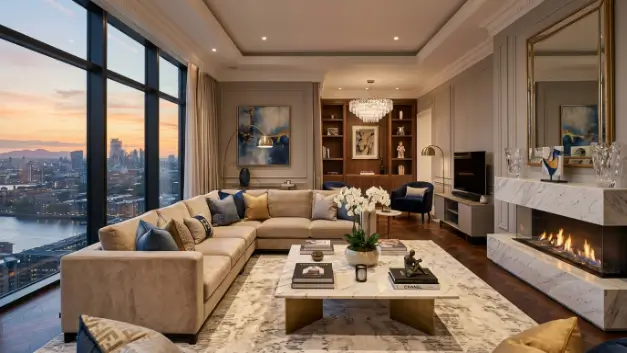
Contemporary luxury doesn’t shout. It’s not about gold trim or crystal chandeliers it’s about material quality and restraint. A contemporary luxury space might use:
- Book-matched stone on a fireplace surround
- Custom millwork with hidden storage
- High-pile natural fiber rugs underfoot
- Lighting on dimmers throughout, layered rather than a single overhead source
The luxury shows up in the details you feel more than the ones you see the weight of a door handle, the way a drawer glides shut, the quality of a linen curtain catching the light.
Contemporary Office and Regional Takes on the Style
Contemporary design flexes depending on where and what it’s applied to.
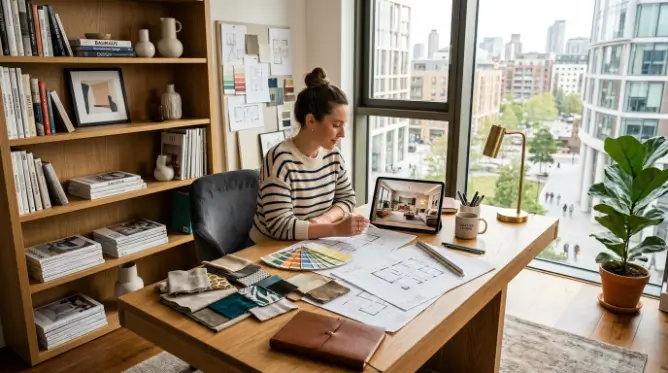
Contemporary office interior design tends to soften the sterility of a traditional workspace with warm wood tones, greenery, and acoustic textiles, while still keeping the clean, uncluttered bones of the style.
Northwest contemporary interior design leans harder into natural materials cedar, stone, floor-to-ceiling glass to connect the home to the surrounding landscape, a regional twist that’s especially popular in the Pacific Northwest.
Contemporary modern Spanish interior design blends the clean lines of contemporary style with warm stucco textures, arched doorways, and terracotta accents, proving the style adapts beautifully to different architectural bones.
Wherever it’s applied, the throughline stays the same: simplicity, quality materials, and a sense of calm.
Blending Contemporary With Other Styles
One of the best things about contemporary design is how well it plays with others. It’s rarely used in isolation most of the best interiors borrow from an adjacent style to add personality.
- Scandinavian brings in even more warmth and hygge-driven coziness
- Japandi merges contemporary simplicity with Japanese craftsmanship
- Boho adds texture, pattern, and a collected-over-time feel
- Minimalist strips contemporary design down even further
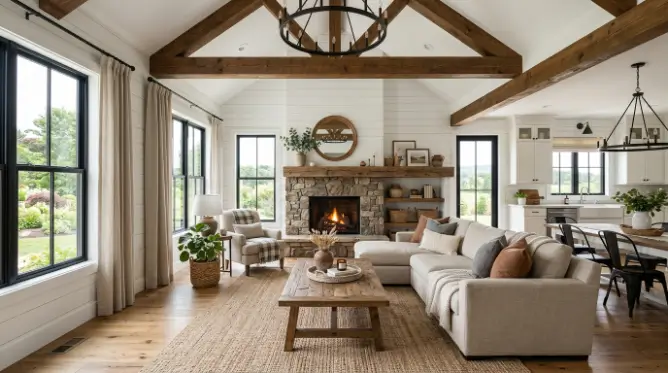
- Rustic and Farmhouse introduce raw wood and vintage character
- Industrial contributes exposed materials like brick and black steel
If you’re not sure which direction fits your space best, that’s usually a sign it’s worth exploring more than one before committing.
How to Start Bringing Contemporary Style Into Your Home Today
You don’t need a full renovation to start shifting your space toward contemporary design. Start small:
- Edit before you decorate remove anything that doesn’t earn its place
- Swap one major lighting fixture for something more sculptural
- Introduce texture through a new rug, throw, or upholstered chair
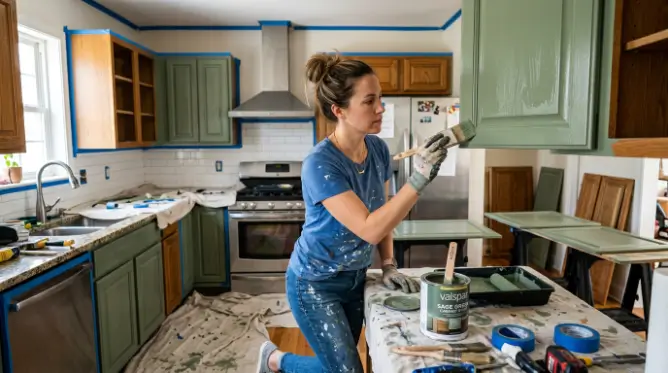
- Repaint trim or walls in a warm neutral instead of stark white
- Let one wall or corner breathe with negative space
Contemporary design rewards patience. It’s less about a single dramatic purchase and more about a series of intentional choices that add up to a room that feels calm, current, and completely yours.
The Bottom Line
Contemporary interior design isn’t a rulebook it’s a mindset. It asks you to choose quality over quantity, calm over clutter, and pieces that feel right for how you actually live, not just how a room photographs. Whether you’re refreshing a single living room or rethinking your whole home, the goal is the same: a space that feels effortless, even though every choice in it was made on purpose.
If you’re ready to bring this style into your own space, start with one room, one honest edit, and one piece you genuinely love. The rest tends to follow.
For more inspiration on bringing contemporary style to life, Decorilla’s guide to contemporary design is a solid next stop.