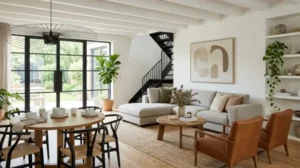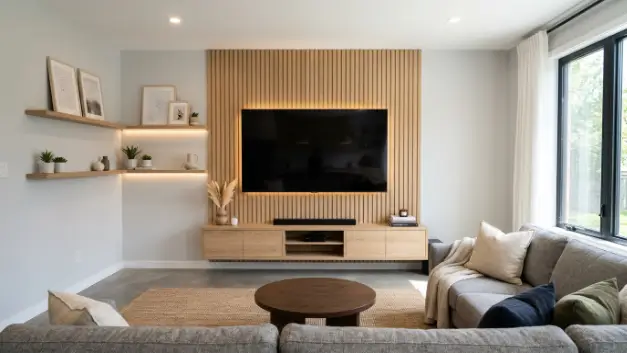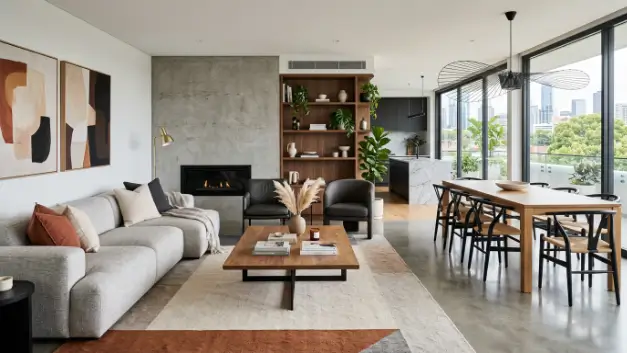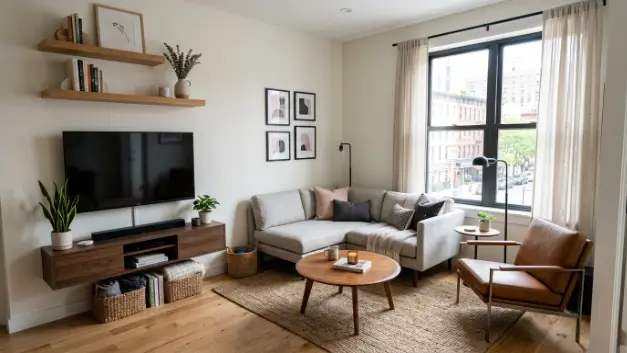
If you’ve ever stood in a furniture showroom trying to figure out why some sectionals cost twice as much as others, there’s a good chance the answer is a hidden mattress. A sectional sofa bed is a multi-piece sofa that combines the generous seating of a sectional with a sleeping surface that folds or pulls out when you need it. It’s the kind of furniture that quietly does two jobs daytime lounging and overnight sleeping without asking for two rooms to do it.
This guide walks through what a sectional sofa bed actually is, the different types on the market, how it compares to a regular sleeper sofa, and what to check before you buy one. Whether you’re furnishing a small apartment, a family room, or a guest space that needs to pull double duty, you’ll find the practical details here.
What Is a Sectional Sofa Bed?
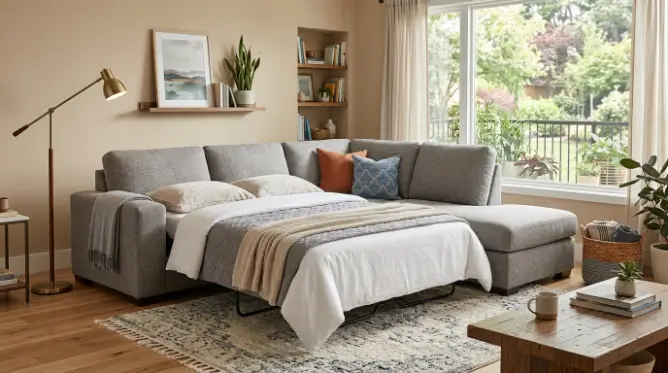
At its core, a sectional sofa bed is exactly what it sounds like: a sectional meaning it’s built from two or more connected pieces, usually in an L-shape or U-shape with at least one section that converts into a bed. Most commonly, it’s the chaise or one of the longer sections that hides the sleeping mechanism underneath the cushions.
During the day, it looks and functions like a normal sectional. You sit on it, put your feet up, host movie nights. At night (or whenever guests show up), one section unfolds, pulls out, or flips down to reveal a mattress. Some models use a twin-size sleeping surface, others stretch to full or queen size, and a few high-end designs offer a king.
How Does a Sectional Sofa Bed Work?
The mechanics vary by brand, but the general process looks like this:
- Start with the normal sofa configuration cushions in place, nothing visibly different from a standard sectional.
- Remove or rearrange the seat cushions, if the design requires it, to expose the frame underneath.
- Pull or fold out the mechanism. Depending on the model, this might be a metal frame that slides out on rollers, a fold-down back cushion, or a lever-operated bar.
- Unfold the mattress that’s stored inside the frame. It’s typically thinner than a standard mattress, though the exact thickness varies quite a bit by brand and model.
- Add bedding, and you have a functioning bed.
- Reverse the steps in the morning to fold it back into a sofa.
Some sectional sleeper sofas use a “click-clack” mechanism where the backrest simply reclines flat. Others use a true pull-out drawer system. The comfort level and ease of use depend heavily on which mechanism your model uses, so it’s worth testing this in person before buying.
What Makes a Sectional Different From a Regular Sofa Bed?
People often use “sofa bed,” “sleeper sofa,” and “sectional sofa bed” interchangeably, but there are real differences.
| Feature | Sectional Sofa Bed | Regular Sofa Bed |
| Seating | More spacious, often seats 5–7 | Usually seats 2–3 |
| Shape | L-shaped or U-shaped | Straight, single piece |
| Sleeping | Built-in bed in one section | Built-in bed in the main body |
| Best for | Families, larger living rooms | Smaller rooms, studio apartments |
| Configuration | Multiple connected pieces | Usually a single piece |
In short: if your priority is seating capacity and you have the floor space, a sleeper sectional makes more sense. If you’re working with a compact room, a traditional sofa sleeper or loveseat sleeper might be the better fit.
Types of Sectional Sofa Beds
Not all sectional sleeper sofas open the same way. Here’s a breakdown of the most common types you’ll come across while shopping.
Pull-Out Sectional Sofa Bed
This is the most traditional style. The mattress is stored in a frame underneath the seat cushions, and you pull it out using attached handles until the frame unfolds and locks into place. A sectional with a pull-out bed usually needs you to remove the seat cushions first, then pull the frame forward before unfolding the mattress. It’s a bit of a workout the first few times, but most people get the hang of it quickly.
Fold-Out Sectional Sofa
A fold-out design works differently. Instead of pulling a drawer-style frame outward, the backrest or an extra panel folds down and outward to create the sleeping surface. This tends to be a faster setup than a pull-out couch, though the mattress in a fold-out model is sometimes thinner.
Convertible Sectional Sofa Bed
A convertible sofa bed doesn’t always use a hidden mattress at all. Instead, sections of the sofa rearrange armrests drop down, backrests recline flat, or modular pieces separate and reconnect to form a flat sleeping surface. These convertible couches are popular in modern and minimalist homes because they skip the bulky metal frame entirely.
Sleeper Sectional With Chaise
A chaise-style sleeper sectional is one of the most common configurations sold today. The chaise section (the extended footrest piece) is usually where the sleeping mechanism is built in, since it already has the length needed for a mattress. The trade-off is that chaise sleeper sectionals sometimes offer a slightly narrower sleeping surface than a straight sofa bed, so it’s worth checking the exact dimensions before buying.
Sectional With Full-Size Sleeper
If overnight guests are a regular occurrence, look specifically for a sectional with a full-size sleeper rather than a twin. A full-size mattress generally offers more room than a twin and can work for two adults, though comfort depends on the specific model, mattress thickness, and personal preference a twin-size sleeper section, by comparison, is best suited to one person or an occasional single guest.
Sectional Sofa Bed vs. Other Sofa Bed Options
It helps to see how a sectional sofa bed stacks up against the other terms you’ll see while shopping.
Sectional Sofa Bed vs. Sleeper Sofa
A sleeper sofa is typically a single, straight piece of furniture. A sectional sofa bed offers more total seating because of its L or U shape, but it also takes up more floor space.
Sectional Sofa Bed vs. Pull-Out Couch
“Pull-out couch” usually refers to the mechanism, not the shape. A sectional can have a pull-out mechanism, and so can a standard sofa. The difference is really about size and layout, not the sleeping technology itself.
Sectional Sofa Bed vs. Convertible Sofa
A convertible sofa often skips the internal mattress and instead relies on reclining or repositioning parts of the frame. Sectionals can be either type pull-out or convertible depending on the model.
Sectional Sofa Bed vs. Sleeper Loveseat
A sleeper loveseat is a smaller two-seat option, ideal for tight apartments or home offices. It won’t offer nearly as much daytime seating as a sectional, but it’s easier to fit into compact rooms.
Sectional Sofa Bed vs. Daybed
A daybed is generally a single-person piece of furniture designed to work as both a sofa and a bed frame, often paired with a twin mattress. It’s not sectional, and it doesn’t usually seat as many people during the day.
Sectional Sofa Bed vs. Futon
A futon typically uses a frame that reclines flat, similar in spirit to a convertible sofa, but it’s usually a single unit rather than a multi-piece sectional. Futons (including many IKEA futon models) tend to be more budget-friendly but less plush than a dedicated sleeper sectional.
Benefits of a Sectional Sofa Bed
Saves Space
One piece of furniture handles two jobs seating and sleeping so you don’t need a separate guest bed or spare room taking up space year-round.
Offers More Everyday Seating
The L- or U-shape gives you noticeably more room to sit than a standard sleeper sofa, which makes it a better fit for family rooms or homes that regularly host groups.
Works Well in Small Apartments
It sounds counterintuitive given the size, but in a studio or one-bedroom apartment, a single multifunctional piece often makes more practical sense than furnishing a separate sofa and a separate guest bed.
Adapts to How the Room Is Used
It functions as a normal living room centerpiece by day and converts into sleeping space by night that flexibility is the main reason sectional sleeper sofas have become such a popular category.
Are Sectional Sofa Beds Comfortable?
This is the question that matters most once you’ve decided on the style. Comfort comes down to a few specific factors:
- Mattress thickness: thinner mattresses generally feel firmer and place you closer to the frame underneath, though this varies by foam density, so it’s worth checking the specific spec sheet rather than assuming based on inches alone.
- Foam vs. innerspring: memory foam and foam-hybrid mattresses tend to feel more comfortable than older innerspring pull-out designs, which are known for a “bar across the back” feeling.
- Seat cushioning: higher-density foam in the daytime cushions usually holds its shape longer.
- Frame quality: steel frames with sturdy joints hold up better over years of folding and unfolding than lighter, cheaper metal.
- Support and frequency of use: a sleeper mechanism used a few nights a month will hold up much longer than one used every night.
Are Sectional Sofa Beds Good for Everyday Sleeping?
For most models, it’s better suited to occasional or guest use rather than nightly sleeping many sleeper mechanisms and mattresses simply aren’t built with everyday use in mind. That said, some higher-end sectionals are specifically designed with thicker mattresses and sturdier frames for more frequent use. If nightly sleeping is the plan, it’s worth looking for a model marketed for that purpose, or comparing it against a dedicated bed.
How to Choose the Right Sectional Sofa Bed
Step 1: Measure Your Room
Check the wall length, room width, doorway width, and how much walking space you’ll have once the sofa is in place both open and closed.
Step 2: Choose the Right Sectional Configuration
Decide between an L-shaped, U-shaped, or reversible chaise sectional based on your room’s layout and traffic flow.
Step 3: Decide on the Bed Size
Sleeper sections typically come in twin, full, queen, or occasionally king sizes. Match this to how many people will realistically use it overnight a full-size sleeper sofa is usually the safer choice if two adults might share it.
Step 4: Choose the Mattress Type
Foam, memory foam, innerspring, and hybrid options all feel different. If possible, test the mattress in the unfolded position, not just the folded seat cushions.
Step 5: Check the Opening Mechanism
Compare pull-out, fold-out, click-clack, and lift/convertible systems. Ask how much effort it takes one person to open and close it some mechanisms genuinely require two people.
Step 6: Consider Fabric and Maintenance
Performance fabric and microfiber resist stains better than standard upholstery. Removable, washable covers are a big plus if kids or pets are part of the household.
Step 7: Check the Sofa’s Everyday Comfort
Remember that 90% of the time, this is a sofa, not a bed. Sit on it. Make sure the seat depth, cushion firmness, and back support feel right for daily lounging.
Step 8: Measure Doorways Before Buying
This one gets skipped constantly. Sectionals often arrive in multiple boxes, but some frames are still bulky enough to need careful maneuvering through hallways, stairwells, and doorframes.
How Much Space Do You Need for a Sectional Sofa Bed?
You need to plan for two footprints: the sofa closed, and the bed fully opened.
Space Needed Behind the Sofa
Most sectional sofa beds are designed to sit against a wall, so the pull-out or fold-out mechanism typically extends forward rather than backward. Clearance requirements behind the sofa are usually minimal, but it’s worth checking the specific model’s manual, since a few designs do need a small gap behind the frame to unfold properly.
Space Needed in Front of the Sofa
Once the bed unfolds, it extends forward from the seat’s front edge often several feet, depending on the mattress size and mechanism. Check the manufacturer’s listed “opened” dimensions rather than estimating, since this varies significantly between models.
Walking Clearance Around the Sectional
Leave enough walking space around any furniture that stays in the room while the bed is open as a rough starting point, most people find at least 2 feet comfortable, though this depends on your household and how the room is used.
Small-Room Sectional Sofa Bed Layout
In tighter rooms, position the sleeper section against a wall with the most open floor space in front of it, and keep coffee tables or side tables mobile so they can be moved out of the way at bedtime.
Sectional Sofa Bed Layout Ideas
Small Living Room Layout
Place the sectional along the longest wall, with the sleeper chaise pointed toward the most open area of the room.
Open-Plan Living Room Layout
Use the sectional to anchor and separate the living area from a dining or kitchen zone, keeping the sleeper section on the side with the most floor clearance.
Apartment Sectional Sofa Bed Layout
In studio apartments, sectionals often double as the room’s main divider between a “living” zone and a “sleeping” zone once the bed is open.
Guest Room + Living Room Combination
A sleeper sectional works well in a multipurpose room that serves as both a home office or den by day and a guest room by night.
Family Room With a Sleeper Sectional
Larger families often benefit from placing the sectional in the center of the room, angled to face a TV, with the sleeper mechanism on the section furthest from foot traffic.
For more practical ideas on organizing and designing your home around multifunctional furniture, take a look at ourHome Edit Guide.
Sectional Sofa Bed Ideas for Small Spaces
Choose a Compact Sleeper Sectional
Look for smaller-scale sectionals built specifically for apartments they trade some seating depth for a footprint that fits narrow rooms.
Use a Reversible Chaise
A reversible chaise lets you flip the sectional’s orientation depending on the room, which is especially useful in rental apartments where you might move again soon.
Choose Hidden Storage
Some sleeper sectionals include storage compartments under the chaise, which is a practical bonus in small apartments where closet space is limited.
Keep the Area Around the Bed Clear
In a small space, plan your other furniture (coffee tables, ottomans, plants) so it can be easily pushed aside rather than permanently blocking the bed’s opening path.
IKEA Sectional Sofa Beds and Futons
What to Look for in an IKEA Sectional
IKEA offers several sectional sleeper lines, and they differ from one another in modularity, mattress thickness, and mechanism type. Rather than assuming across the whole range, check the specific model’s product page for mattress dimensions and material this can vary noticeably from one IKEA sectional to the next.
IKEA Sectional vs. IKEA Futon
Within IKEA’s lineup, a futon is generally a simpler, single-piece frame that reclines flat, while a sectional sleeper is a larger, multi-piece setup with a hidden pull-out or fold-out bed. Exact specs and pricing depend on the specific product line, so it’s worth comparing individual models rather than the categories as a whole.
When an IKEA Sleeper Option Makes Sense
If you’re furnishing a first apartment or a room on a budget, an entry-level IKEA futon or sectional sleeper can be a practical starting point for occasional use just check the individual model’s reviews and specs, since comfort and durability vary across their range.
How to Style a Sectional Sofa Bed
Add Throw Pillows
A handful of pillows in varying textures makes the sleeper sectional feel intentional rather than purely functional.
Use a Large Area Rug
A rug sized to extend slightly beyond the sofa’s footprint helps ground the room and hides any wear from the pull-out mechanism.
Add a Coffee Table With Enough Clearance
Choose a coffee table that can be easily slid or lifted out of the way when the bed opens.
Layer Lighting
Combine floor lamps and table lamps so the room still feels cozy at night, even after the sofa converts into a bed.
Choose a Color That Works With the Room
Neutral tones hide daily wear better, which matters more on a sofa bed than a purely decorative sofa, given the extra use it gets.
Keep the Sleeper Mechanism Easy to Access
Avoid boxing the sectional in with heavy furniture on the side where the bed opens.
Sectional Sofa Bed Placement: A Feng Shui and Design Perspective
If your sectional sofa bed is part of a studio apartment, guest room, or any multifunctional space that doubles as a sleeping area, furniture placement is worth some thought both from a practical layout standpoint and, if it interests you, from a feng shui perspective. According to feng shui principles, where a bed opens, how much space surrounds it, and which direction it faces can influence how calm a room feels once it’s converted for the night. These are design and feng shui guidelines rather than proven outcomes, but many people find them a useful starting point for arranging a multifunctional room.
OurFeng Shui Bedroom Guide covers bed placement, room flow, colors, and furniture positioning in more detail, if you’d like design inspiration for a sectional that’s doing double duty as a bedroom.
How to Turn a Sectional Sofa Into a Bed
- Clear the area in front of the sleeper section, moving tables or ottomans out of the way.
- Remove or rearrange the cushions, depending on your model’s mechanism.
- Pull out or fold the bed mechanism according to the manufacturer’s instructions.
- Position the mattress, making sure it’s fully unfolded and locked flat.
- Add bedding a mattress topper can help soften a thinner sleeper mattress.
- Make sure there’s enough walking space around the newly opened bed.
- Convert it back into a sofa in the morning by reversing each step.
This is essentially how any couch that turns into a bed works, though the exact number of steps varies by mechanism.
How to Care for a Sectional Sofa Bed
Clean the Upholstery Regularly
Vacuum and spot-clean based on the fabric’s care tag; performance fabrics usually tolerate more frequent cleaning.
Vacuum Under the Cushions
Crumbs and dust build up quickly in a piece of furniture that gets opened and closed regularly.
Check the Bed Mechanism
Every few months, inspect the frame’s hinges, wheels, or folding joints for squeaking or looseness.
Rotate the Mattress When Possible
If the sleeper mattress is removable, rotating it occasionally helps it wear more evenly.
Don’t Overload the Sleeper Mechanism
Avoid piling excess weight (storage boxes, heavy blankets) inside the frame when it’s folded shut.
Follow the Manufacturer’s Weight Limits
Most sleeper mechanisms have a stated weight capacity for the mattress and any sleepers exceeding it regularly shortens the frame’s lifespan.
Common Mistakes When Buying a Sectional Sofa Bed
Mistake 1: Buying without measuring the room. A sectional that looks reasonably sized in a showroom can overwhelm a smaller living room.
Mistake 2: Forgetting the bed’s opened dimensions. The sofa’s closed footprint tells you very little about how much space you’ll need once the bed is out.
Mistake 3: Choosing looks over comfort. A beautiful sectional that’s uncomfortable to sit on daily will disappoint far more than a slightly less stylish one that feels right.
Mistake 4: Ignoring mattress quality. The frame and fabric matter, but the mattress is what determines whether guests actually sleep well.
Mistake 5: Forgetting doorway measurements. Some sectional frames won’t fit through standard doorways or up narrow staircases.
Mistake 6: Choosing a sectional that’s too large. Oversized sectionals can block walking paths and make a room feel cramped rather than cozy.
Mistake 7: Not checking the conversion mechanism. Always test opening and closing it yourself before buying, ideally without help from a salesperson.
Frequently Asked Questions About Sectional Sofa Beds
What is a sectional sofa bed? It’s a multi-piece sectional sofa with a built-in mattress that pulls out, folds out, or unfolds from one of its sections, giving you extra sleeping space without needing a separate bed.
What is the difference between a sleeper sectional and a sofa bed? Mainly shape and seating capacity a sleeper sectional is L- or U-shaped, while a standard sofa bed is usually one straight unit. Both can use similar sleeping mechanisms.
Can a sectional sofa turn into a bed? Yes, many models include a chaise or section that unfolds or pulls out into a mattress.
Is a sectional sofa bed comfortable for sleeping? It varies by model. Foam and hybrid mattresses generally feel more comfortable than thinner, older-style innerspring designs, but it’s worth checking the specific product’s mattress details.
Are sectional sofa beds good for small apartments? Compact or reversible-chaise models can work well, since one piece of furniture covers both everyday seating and occasional guest sleeping.
What size mattress does a sectional sleeper use? Most commonly twin or full, though some models offer queen or king options.
What is the difference between a pull-out couch and a sleeper sectional? “Pull-out couch” refers to the mechanism itself, while “sleeper sectional” refers to the shape and seating layout a sectional can use a pull-out mechanism or a different one entirely.
Is a sleeper loveseat better than a sectional? It depends on your space. A sleeper loveseat fits smaller rooms better, while a sectional offers considerably more everyday seating if you have the floor space.
Is a futon the same as a sofa bed? Not exactly. A futon is typically a single-piece frame that reclines flat, while a sofa bed usually has a separate, hidden mattress that pulls or folds out.
Is an IKEA sectional good for sleeping? It depends on which model you’re looking at IKEA’s sectional sleeper lines vary in mattress thickness and mechanism, so it’s worth checking the specific product’s specs rather than judging the brand as a whole.
How much space does a pull-out sectional need? It varies by model, but most sectionals need floor space in front of the sofa often several feet for the bed to fully extend. Check the manufacturer’s opened dimensions before buying.
What’s the most important thing to check before buying one? Mattress quality, frame durability, and how easy the mechanism is to open matter most but don’t overlook everyday seating comfort, since the sofa will spend far more time as seating than as a bed.
Final Thoughts
A sectional sofa bed is best thought of as a two-in-one furniture solution: comfortable, spacious seating during the day, and a functional sleeping surface when guests stay over. The right one for your home comes down to a fairly simple sequence measure your space, choose a configuration that fits your room’s shape, decide on the sleeper size you actually need, test the comfort of both the seating and the mattress, inspect how the conversion mechanism works, consider the fabric and maintenance needs, and double-check the room clearance before it arrives.
Get those basics right, and a sectional sofa bed can genuinely replace the need for a separate guest room without asking you to compromise on everyday comfort.